Bunny Munro’s alcoholism
The Death of Bunny MunroBunny Munro’s alcoholism is a recurring pattern of drinking that offers him brief escape without removing him from the responsibilities and consequences he is trying to evade. He drinks Scotch and spirits in hotel rooms, says plainly to Georgia that he is drunk, and later buys whisky while driving with Bunny Junior. The sequence links alcohol to attempted oblivion, impaired judgment, and visible distress, while placing a child close enough to witness the pattern.
Repeated Drinking and Its Settings
At the Queensbury Hotel, Bunny lies on a bed in his zebra-striped briefs, drinking Scotch and watching a small television while Bunny Junior occupies the other bed. The room is a bleak setting for this private routine: the boy is struggling to settle, and the father drinks within the same confined space. The scene does not present drinking as an isolated social occasion. It is part of the night’s ordinary arrangement, alongside the television, the hotel room, and Bunny’s responsibility for his son.
Later, with a storm outside and Bunny Junior asleep nearby, Bunny drinks miniature bottles of Smirnoff and Gordon’s gin in succession. The action is described as practised, making the sequence feel routine rather than spontaneous. He closes his eyes as if seeking oblivion, but his thoughts continue to move through the events and people of the preceding day. The contrast is central to the pattern: alcohol is used in pursuit of mental escape, yet it does not shut off the activity of his mind. His drinking and his restless thoughts occupy the same scene.
Drinking Amid Responsibility
Bunny’s alcohol use repeatedly takes place while Bunny Junior depends on him. At the Queensbury Hotel, the child sleeps in the neighboring bed while Bunny drinks and watches television. During the storm, the boy again sleeps nearby as Bunny drinks the miniature spirits. These arrangements make the father’s drinking inseparable from his role as caregiver: he is not removed from the child’s presence, even when he is trying to withdraw into intoxication and sleep.
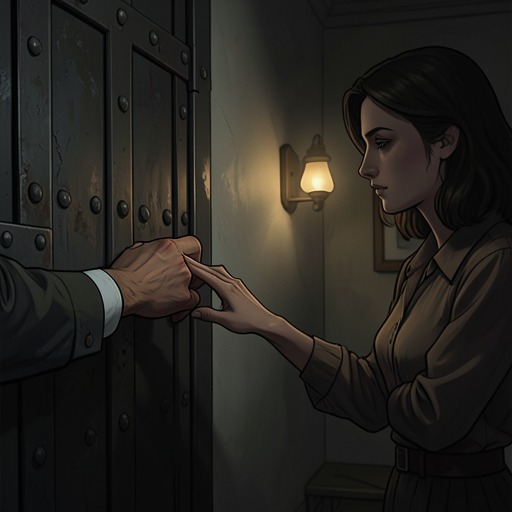
The tension becomes more explicit outside Mary Armstrong’s bungalow. Before going inside, Bunny leans across to tell Bunny Junior to wait, then takes a drink from his flask and puts it in his jacket pocket. The small, portable flask carries the habit beyond the hotel room and into an encounter for which his son is left waiting outside. The evidence establishes the sequence, not a complete account of what Bunny intends or how much he drinks there; its importance lies in how little distance separates his drinking from an act of responsibility toward the boy.
Admission and Escalation
When Georgia asks what is wrong, Bunny tells her that he is drunk. The admission is brief and direct, unlike the grander self-presentations with which he often approaches other people. It does not by itself show that he has stopped drinking or changed his conduct. Instead, it gives the state a name in a moment of contact with another person, while the surrounding scene continues to show him smoking and confronting severe weather outside the hotel.
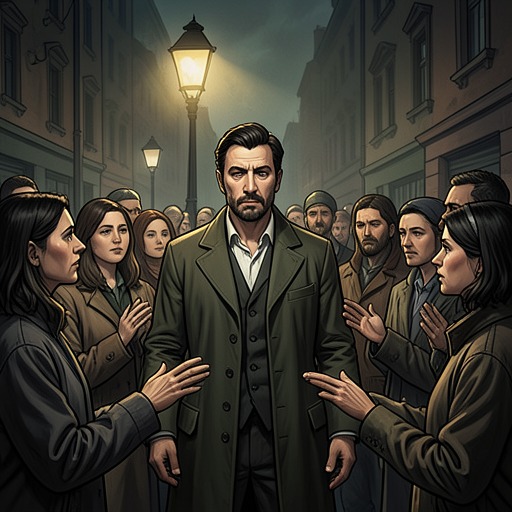
Afterward, Bunny’s drinking appears within a broader collapse of composure. As Bunny Junior clutches his encyclopaedia in the Punto, Bunny drives around in circles, crying and uncertain of where he is going or what he is looking for. He has stopped at a shop and bought cigarettes and a bottle of whisky; the account places smoking, drinking, erratic driving, and tears together without reducing the episode to any single cause. The boy’s distress is sharpened by the contrast between the certainty he finds in factual knowledge and his inability to understand what to do about his father.
Narrative Significance
The repeated settings trace the reach of Bunny’s drinking: from the closed hotel room, to the storm outside, to the roadside stop and the car in which his son travels. Alcohol accompanies both attempts at retreat and moments when Bunny must still act in the world. He drinks while Bunny Junior is close by, takes a flask before leaving him to wait, and later drives after buying whisky. These details make the habit consequential through circumstance rather than through a separate explanation of its origins.
The narrative also resists treating intoxication as a clean escape. When Bunny seeks oblivion, his thoughts persist; when his distress becomes unmistakable, Bunny Junior is present to observe it. The father’s drinking therefore deepens the imbalance in their relationship: the adult who should offer direction is at times unable to orient himself, while the child is left holding his encyclopaedia and trying to interpret what is happening. Bunny’s alcoholism is presented as a repeated form of evasion whose effects remain visible to the person most dependent on him.